Planning the Peripheries: C.H.B. Quennell and the Making of Suburbia

Charles Henry Bourne Quennell (1872–1935) was an architect and planner whose quiet influence helped define the look and feel of early twentieth-century suburbia. Though largely forgotten today, his work shaped the design of countless homes and streets across London and beyond. In 1906, critic Herman Muthesius described him as 'an excellent designer of high artistic sensibility' - praise that remains well earned.
At Levrant, we've encountered many of Quennell's houses through our work in London's suburbs. His designs combine economy and elegance, guided by a belief that architecture should serve both practicality and beauty. In his book: “Modern Suburban Houses” (1906), he modestly claimed, 'plan has been the first consideration, unnecessary ornamentation has been avoided.' Function, not display, defined his approach - an ethos that anticipated later modernist ideals of utility and restraint.
A practical beauty
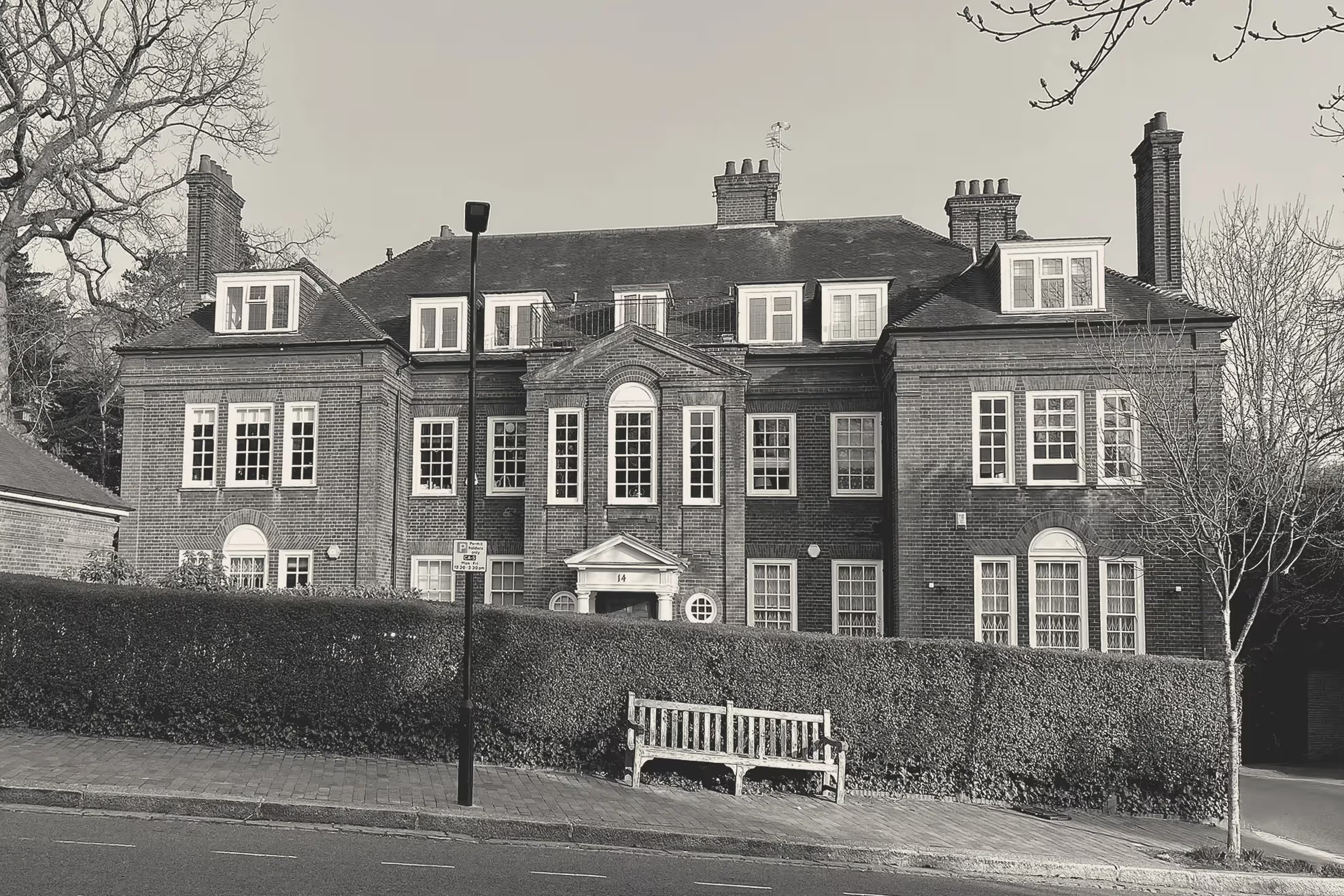
Quennell's real innovation lay in the plan. He focused on light, ventilation, and domestic flow - ensuring that thoughtful thresholds separated kitchens and dining rooms and that rooms could serve multiple purposes as family habits evolved. His façades were equally disciplined: overhanging eaves, projecting bays and balanced fenestration borrowed from the Arts and Crafts, while the crisp symmetry and pronounced quoins nodded to Neo-Georgian formality.
Though understated, these houses have a distinctive character. In the Redington and Frognal Conservation Area of Hampstead - dubbed 'Quennell Land' - his semi-detached homes show how modest materials and measured proportions can produce lasting harmony. Their careful siting, mature planting and subtle variations give the sense of an organic suburb that has grown naturally from the landscape.
Streets with a sense of place
Quennell cared as much about the street as the house. He argued that when towns expand into the countryside, they should do so ‘in a seemingly manner,’ preserving hedgerows, trees and irregular plots to soften the transition between city and field. The result is a kind of curated informality — a balance between order and individuality that continues to make his neighbourhoods appealing today.
A lasting legacy
Quennell's influence extended to contemporaries such as Thomas Wilson, James Cowper, and John Soutar, whose work in the Hampstead Garden Suburb further developed his ideals. His collaboration with steel window pioneers, Crittall on workers' cottages in Essex, and his designs from Bromley to Braintree, reveal a broad and adaptable practice rooted in the realities of everyday living.
Research shows that most surviving Quennell houses now sit within conservation areas, though few are formally listed - a reminder of how quietly he shaped the suburban ideal. His work remains an argument for thoughtful design: practical, humane, and attuned to the lives of those who inhabit it.