The Regency Townhouses
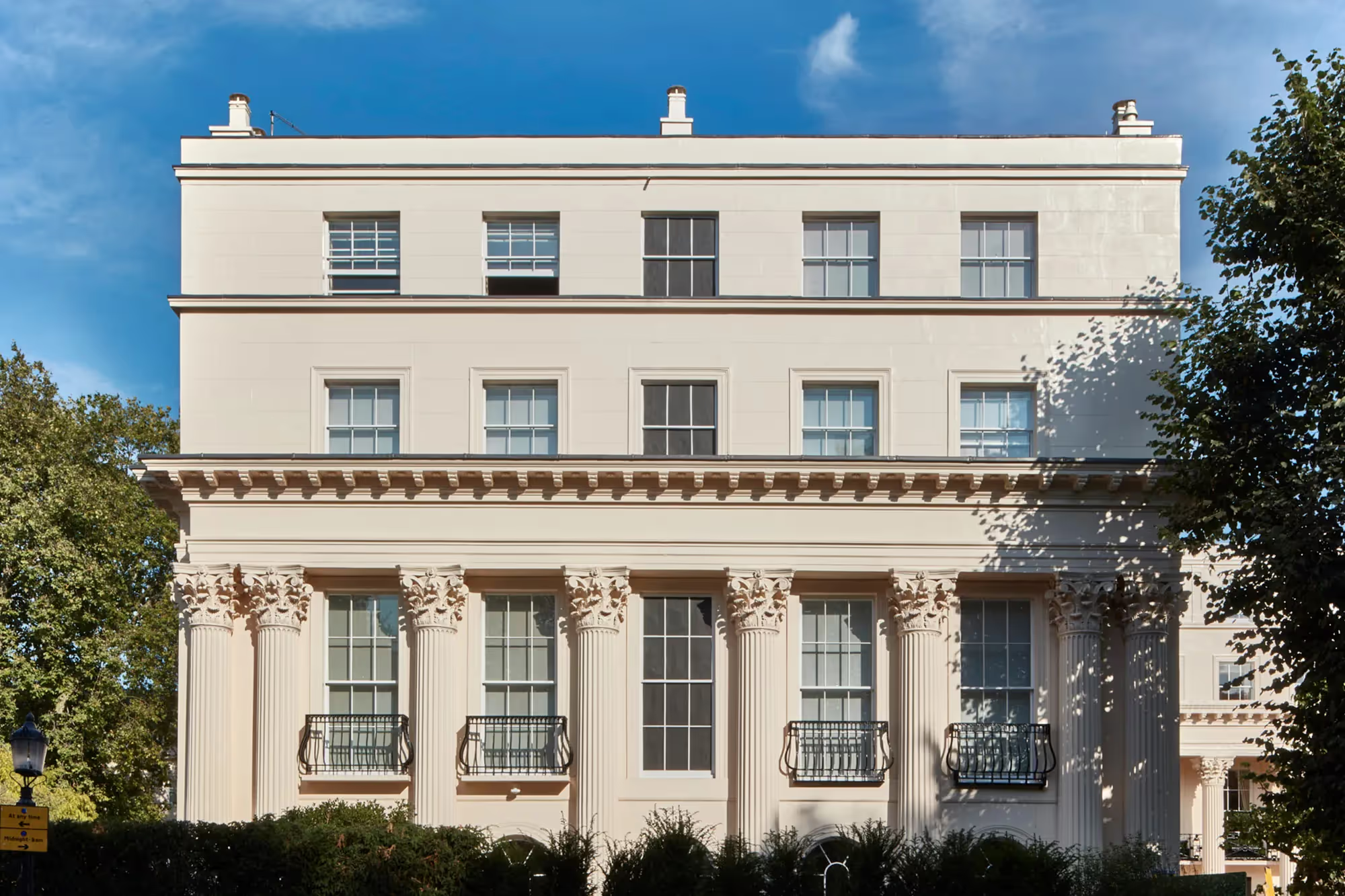
Based in London but working across the UK, Levrant has had the opportunity to conserve and adapt many Regency buildings. These townhouses epitomise part of Britain’s historic streetscape, and understanding their origins is key to caring for them well.
The Regency in context
The Regency period, roughly 1790 to 1830, marked a cultural, political, and architectural transition between the Georgian and Victorian eras. Though the official Regency lasted only from 1811 to 1820, its architectural influence endured far longer, shaping towns and cities across Britain.
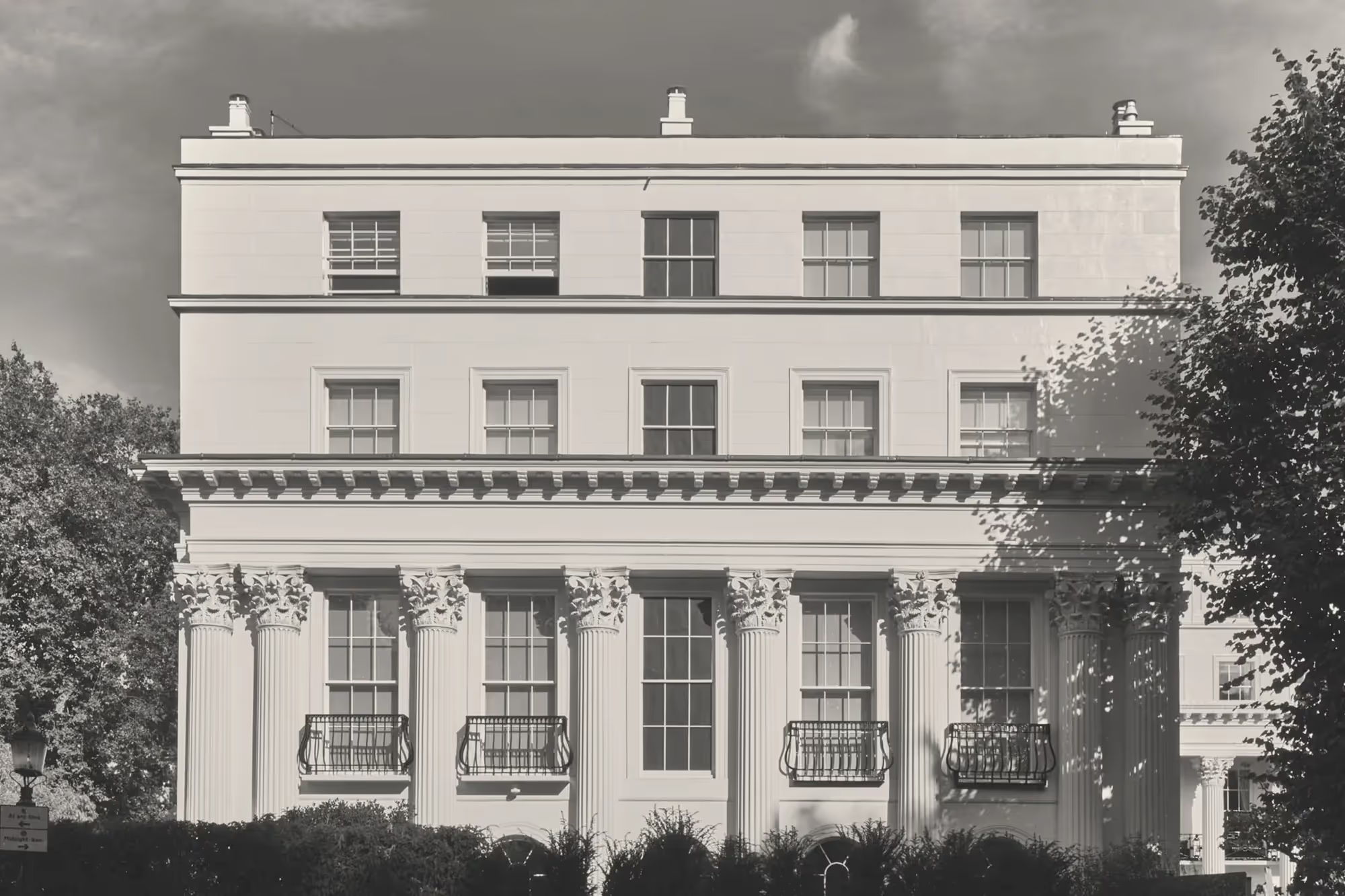
Elegant terraces in places such as Brighton and Cheltenham became the signature of the style. Rooted in Georgian neoclassicism, Regency architecture introduced a lighter, more refined character: smooth stucco façades, elegant proportions and a clear sense of urban order.
The rise of the townhouse
After the Battle of Waterloo in 1815, Britain entered a period of prosperity that spurred a wave of housebuilding. The townhouse, already a familiar typology, became the model for urban living - efficient, dignified, and adaptable. It reflected the social structure of its time, with a clear distinction between the family’s spaces and those of the servants, while offering elegant rooms for dining and entertaining.
The Building Act of 1774, often dubbed ‘the Black Act’, had laid the foundations for this expansion. By standardising materials, proportions and layouts, it improved quality and safety while defining four ‘rates’ of houses by status, size and value. First- and second-rate houses framed formal squares; minor third- and fourth-rate houses filled the surrounding streets. Together they created the layered, harmonious pattern still visible in many Regency neighbourhoods.
Inside, the townhouse followed a clear hierarchy. The basement contained kitchens and staff rooms; the ground floor, dining and morning rooms; and the “piano nobile” - the first floor - offered grand drawing rooms for receiving guests. Bedrooms and attics rose above, often with mews buildings to the rear—the design combined practicality with grace, qualities that continue to define these homes today.
Materials and style
Architects such as John Soane, Robert Smirke and John Nash shaped the period’s architecture. While neo-classicism remained central, the Regency spirit encouraged greater freedom and occasional exotic influence. Advances in transport and materials also transformed building practice. Stucco became the surface of choice - smooth, pale, and durable - giving terraces their distinctive lightness and refinement.
Our work
The Regency townhouse captures a moment of elegance and progress - an architecture of proportion, balance, and optimism. At Levrant, we approach these buildings with the same spirit: understanding their form and fabric, and working with care to ensure their continued life and relevance.